A series in 4 parts
Denver Conditions
Three write-ups about faults that read differently a mile up than they do at sea level — the summer cooling that puts water into the air, the dry winter that takes it out again, and a cabinet caught in the middle of both. If one of them gets yours back to temperature without a visit, that is the right outcome.
Between visits there is also The Denver Wine Cabinet Handbook, which is the routine rather than the diagnosis.
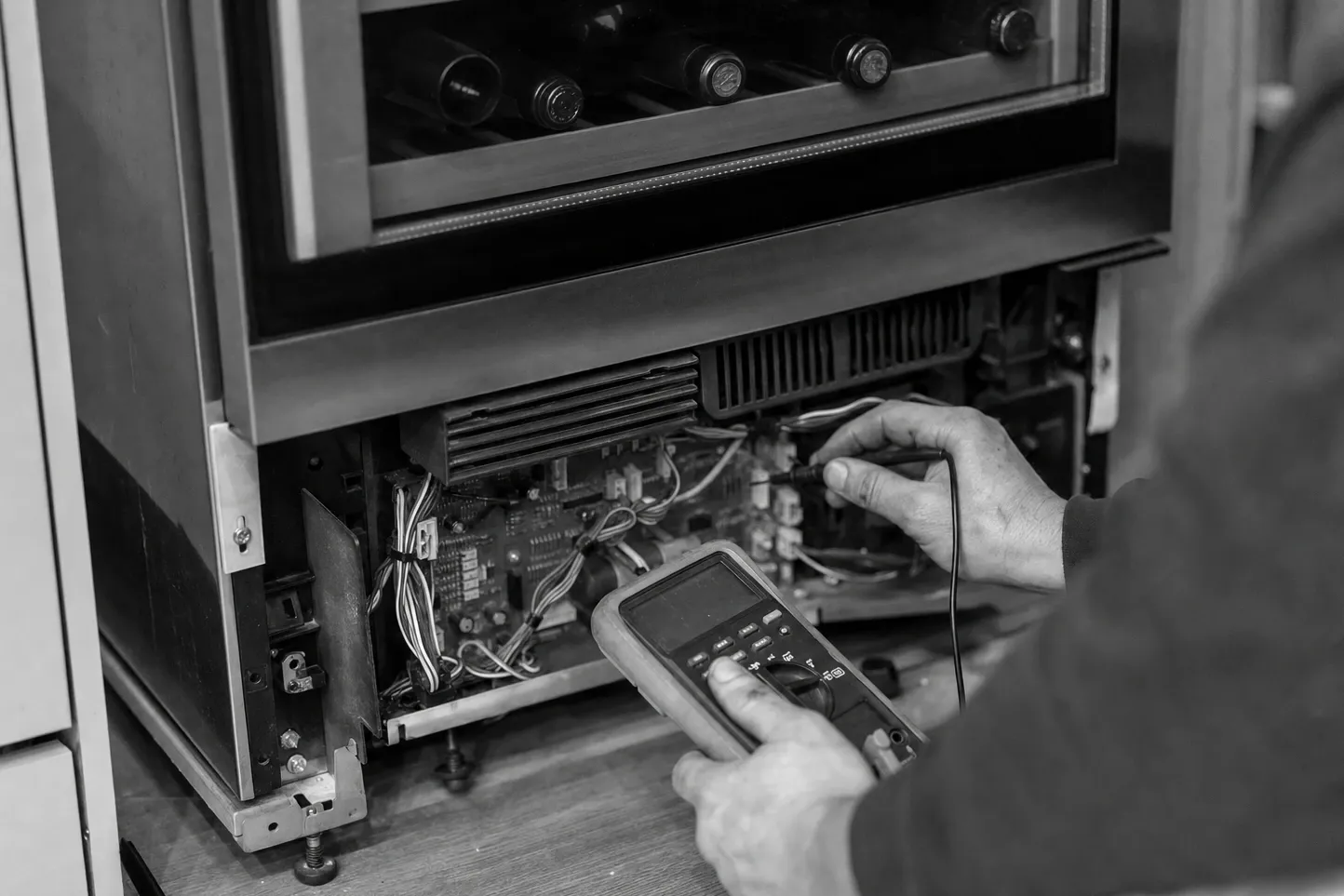
- How to Clean a Sub-Zero Ice Maker, Model by Model To clean a Sub-Zero ice maker, empty the bin and run the CLEAN cycle with descaler and then sanitizer on undercounter models, or wash the bin by hand on full-size units. Here are the steps, amounts and intervals for Denver kitchens.
- Your Swamp Cooler Is Why the Sub-Zero Is Sweating: Summer Condensation and Gasket Mould in Park Hill If your Sub-Zero starts beading along the door frame in June and stops in September, suspect the evaporative cooler rather than the sealed system. Swamp coolers raise indoor humidity by design and pull unfiltered outside air through the house — here is how that reads on a built-in.
- Frost Around a Sub-Zero Freezer Drawer Through a Denver Winter Where the frost sits tells you which fault you have. A rim of ice around the opening is a sealing problem; a sheet on the back wall is the defrost circuit. How to tell them apart in a dry Denver house before you book anyone.
- Sub-Zero Running Constantly and Still Drifting Warm in Denver A built-in that never rests but never gets cold is almost always rejecting heat badly, not making cold badly. What that means in a Denver kitchen, and how to tell a lint-packed condenser from a real sealed-system fault.
Read it, then decide whether it is worth a visit
On site seven days a week, 8 am to 8 pm across the Denver round. Line picked up 24/7. The diagnosis is $89 and it comes off an approved repair.