The Denver Wine Cabinet Handbook · Part 1 of 7
Dry air and the door gasket: keeping the seal soft
A wine cabinet holds its temperature by being shut, and the thing that keeps it shut is a strip of flexible rubber that Denver spends most of the year drying out. This is the part of the handbook Denver Sub-Zero Repair Pros would hand to anyone who has just noticed their cabinet running longer than it used to, before anybody starts talking about the compressor.
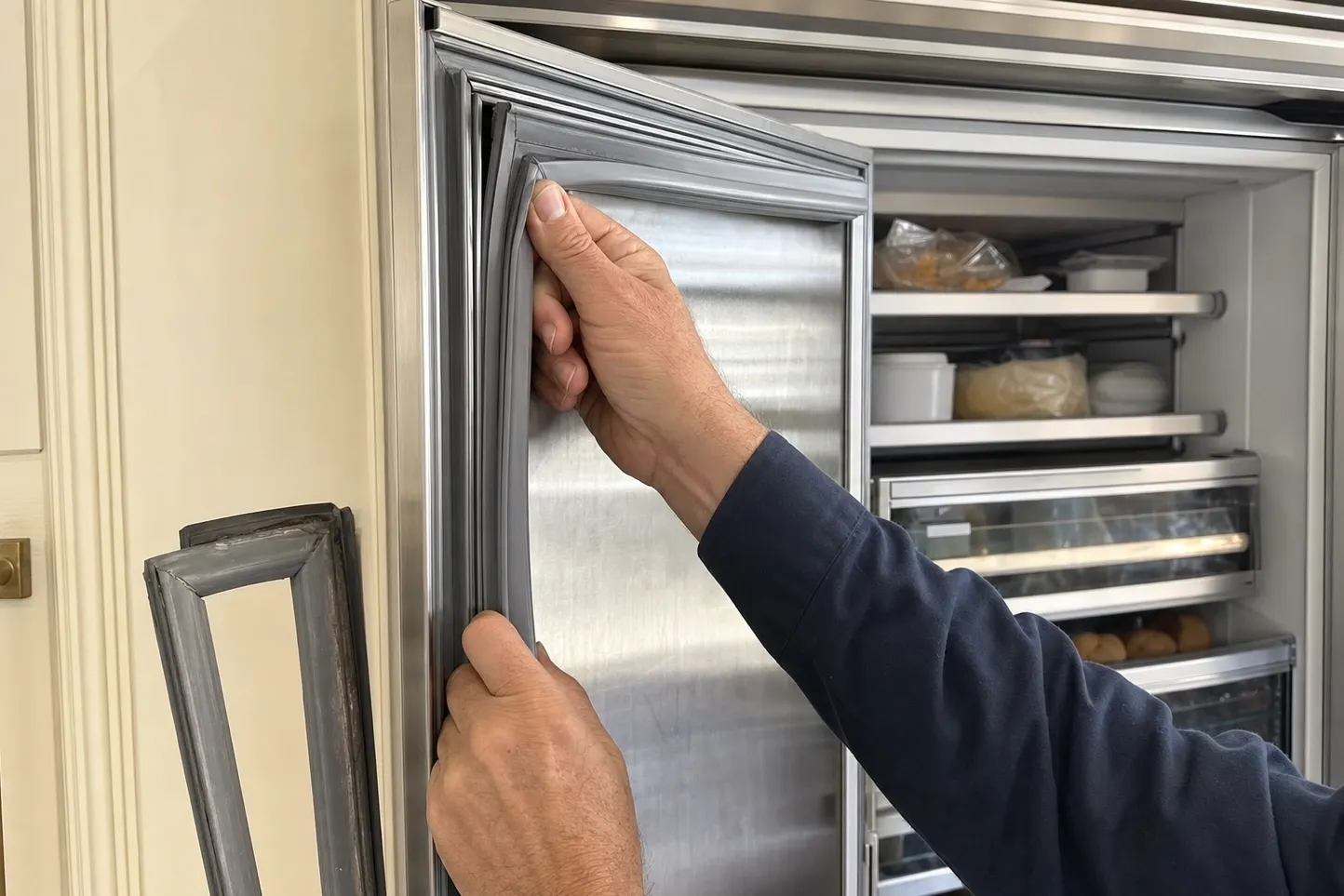
What the dry air actually does
A door gasket is a magnetic strip inside a flexible sleeve, and the sleeve stays flexible because of plasticisers held in the material. Dry air draws them out faster than damp air does, and the sleeve goes from rubbery to stiff. Stiff is not broken: it still seals when the door is pushed home. What it stops doing is pulling the last few millimetres shut by itself.
That is the whole reason the fault goes unnoticed, because nobody watches a door close. Months later they notice the cabinet running whenever they walk past, or the top rack sitting warmer than the bottom — and warm air enters at the top of any leak.
Where to look, in order
Start at the hinge corners. The strip is bent hardest there and worked every time the door swings, so a stiffened gasket splits there long before it splits anywhere else. Then run a finger along the bottom edge, which on an undercounter cabinet collects everything that gets dropped; grit worked into the sleeve abrades it from outside.
Only then look at the long sides. If those have failed and the corners have not, the cabinet is out of alignment rather than worn, and that is a different job.
What a cleaning will and will not fix
A seal gone sticky, or carrying a film of dust and spilled wine, will often close properly again after a wipe with the soap-and-baking-soda solution the manufacturer specifies. Do that on a schedule rather than once something is wrong.
A seal that has hardened all the way through will not come back, and the products sold for putting flexibility back are the ones that caution is warning you away from.
The routine
- Once a month Wipe the seal and the frame it lands on with a mild solution of soap, water and a little baking soda, which is what the manufacturer's own care guide asks for. Rinse it, dry it properly, and keep water off the lights and the control panel.
- Never, whatever the internet says Do not use vinegar, rubbing alcohol or any alcohol-based cleaner on an interior surface. Sub-Zero prints that as a caution in the use and care guide, and it applies to the seal as much as to the liner and the wooden facings on the racks.
- When the heating goes on in October Run the paper test round all four sides. The house has just got drier than it was all summer, and a seal that passed in August will sometimes fail in the first fortnight.
- Twice a year Look along the whole run for splits, tears and corners lifting out of the channel. A gasket that has physically failed is a replacement, not a cleaning job — the manufacturer says the same thing in its troubleshooting list.
- Any time the cabinet is left open Close it and give it an hour. A door left ajar disables the interior lighting to keep excess heat out of the cabinet, so lights that have gone out are often a door that was never shut rather than a lamp that has failed.
Stop here A split, a tear, or a corner that has pulled out of its channel is past the point a cloth can help — and so is a door that still will not close on its own against a seal with nothing visibly wrong with it, because the fault has moved to the hinge or the alignment. Denver Sub-Zero Repair Pros takes it from there — call (720) 790-9436, or reserve a slot.
Two follow-ups
What is the paper test?
Shut the door on a strip of paper so half of it is inside, then pull. A seal doing its job grips it hard enough that the paper tears or drags. Anywhere it slides out freely is a gap, and gaps are almost always at the hinge corners or along the bottom edge where the strip has been compressed longest.
My cabinet runs constantly but the temperature looks right. Is that the seal?
It can be, and it is worth ruling out first because it costs nothing. A cabinet leaking warm air holds its setting by running far more than it should, which is a reading you only get from watching it. If the seal passes and it still never rests, call Denver Sub-Zero Repair Pros on (720) 790-9436 and have the zones and the condenser read properly.