The Denver Wine Cabinet Handbook · Part 5 of 7
Vibration, levelling and sediment
Wine keeps better when it is left alone, and a cabinet that has begun making a different noise is telling you something has moved. Most of the time the thing that moved is outside the cabinet rather than in it. This part of the handbook is what Denver Sub-Zero Repair Pros would have you listen for, and where the listening should stop.
What actually changed
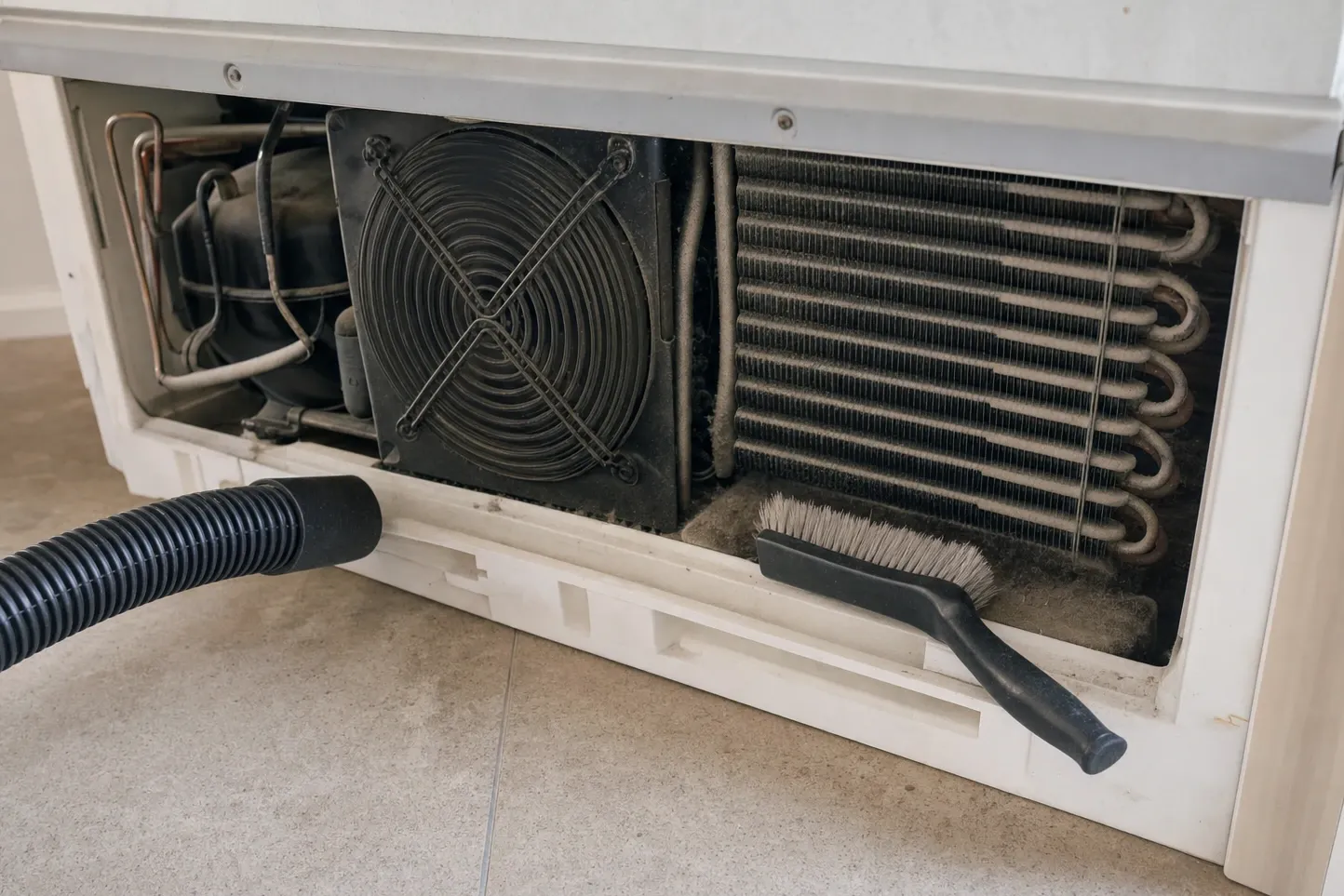
A wine cabinet makes a small amount of noise all the time and always has. The compressor turns, a fan behind the grille pushes warm air out at floor level, and another moves cold air round the compartment. So when an owner says the cabinet has got loud, what they usually mean is that the note changed: the same running sound arriving through the floor or the joinery instead of dying inside the machine compartment. An older bottle that has thrown a deposit is the one that minds.
Almost every time, the thing responsible sits outside the cabinet. A floor is relaid and the unit stands a fraction differently. A plinth goes back tight against the case. A run of cabinetry is rebuilt around a cabinet that was there first. Somebody reseats a rack and does not push it home.
What you can check yourself
All of this is done with the door open and your hands, and none of it needs a tool. Is the cabinet bearing on its own feet, or has a plinth taken some of the weight? Can you run a finger down each side and find nothing touching? Are the racks pushed fully back and sitting flat? Is anything stacked on top of the cabinet or leaning against it?
Then close the door, stand still and listen for a minute. A note that comes and goes with a fan is one thing; a note that is there whenever the compressor runs is another.
What somebody with a meter checks
Compressor mounts perish and go hard, a fan can pick up a wobble, and a cabinet can sit in its opening without being square in it. Those are causes rather than chores: they live behind panels, and the guide’s list of jobs for an owner stops at cleaning, loading and the controls.
The routine
- After any building work in the room Open the door, look at how the cabinet is sitting, and check that the plinth and the new flooring are not now carrying part of its weight. This is the moment a hum changes, and the cheapest one to catch.
- Whenever a rack has been out Push it fully back onto its runners and make sure it is sitting flat before you reload it. A rack left proud rattles against the liner and sounds exactly like something mechanical.
- Once a year, with the room quiet Stand in front of the cabinet for a full minute with nothing else running and get to know the sound it makes. A baseline in your head is the only way to know later that something has changed.
- Before a case goes in Clear whatever has collected on top of the cabinet. A tray, a crate or a stack of glasses will amplify a hum the cabinet itself has always made.
Stop here A note that is new, that does not go away when nothing is leaning on the cabinet, and that is there every time the compressor runs has moved inside the case. Denver Sub-Zero Repair Pros takes it from there — call (720) 790-9436, or reserve a slot.
Two follow-ups
Does vibration really affect wine?
Opinions differ on how much a low hum matters over a few months, and nobody serious argues that constant hard vibration is good for an older bottle carrying sediment. The practical answer is simpler: a change in vibration is a change in the machine or in what it is standing on, and that is worth knowing about whatever it does to the wine.
Is a humming cabinet a compressor about to fail?
Not on its own. A compressor that is running is doing its job, and the hum is what running sounds like. What matters is whether the note is new, whether it tracks the compressor or a fan, and whether the cabinet is still holding its setting while it makes it. Ring Denver Sub-Zero Repair Pros on (720) 790-9436 and describe all three.